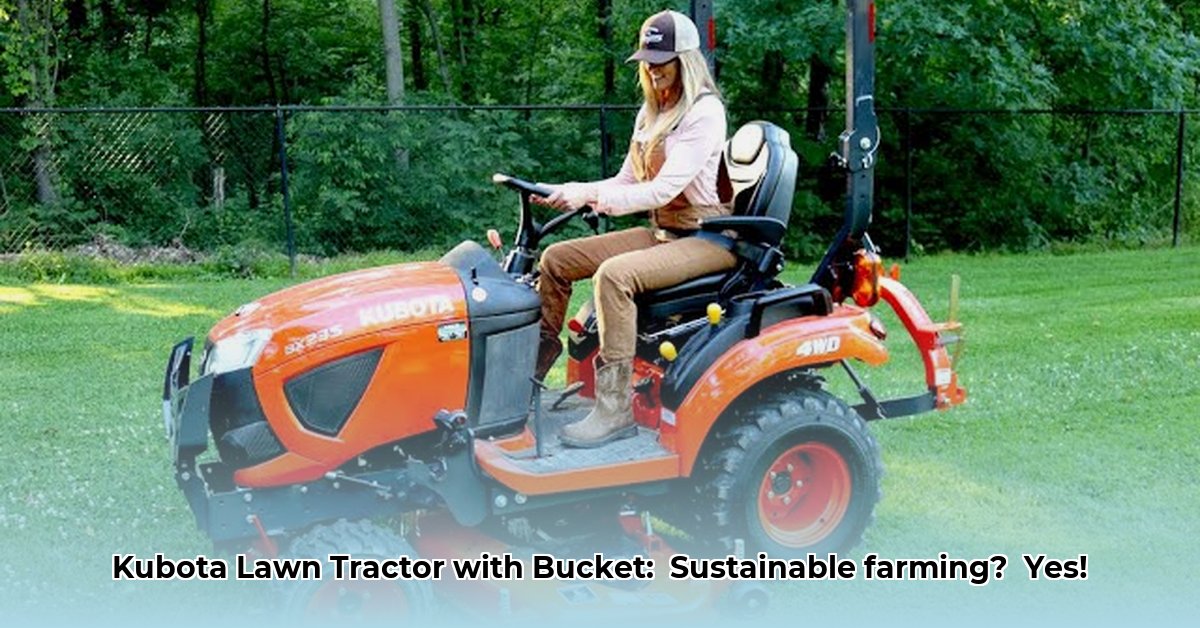
Power, Performance, and Sustainable Impact
Thinking about boosting your farm's efficiency and eco-friendliness? A Kubota lawn tractor with a bucket offers a surprisingly versatile solution for sustainable agriculture. This guide explores its capabilities, from robust performance to detailed, step-by-step instructions for various sustainable farming tasks. We’ll also examine its long-term cost-effectiveness and environmental impact. For more information on tractors with loaders, check out this helpful resource: Tractor Loaders.
Is a Kubota lawn tractor's power and maneuverability suitable for diverse farming tasks? Yes, its robust engine and impressive lifting capacity make light work of moving materials—from compost to soil amendments—even across uneven terrain. Kubota's reputation for reliability ensures years of dependable service, minimizing repairs and replacements, resulting in significant cost savings. This directly contributes to a smaller environmental footprint—a win-win for both your budget and the planet.
Typical specifications (which vary by model) include:
| Feature | Description |
|---|---|
| Engine Power | 15-25 horsepower (depending on model) |
| Bucket Capacity | 4-8 cubic feet |
| Turning Radius | Approximately 8-12 feet |
| Fuel Efficiency | Generally high, minimizing fuel costs |
Sustainable Farming Applications: Step-by-Step Guidance
The Kubota tractor's versatility simplifies many sustainable farming practices. Let's explore some key applications:
Composting Made Easy: A Step-by-Step Guide
- Gathering (15 mins): Collect organic waste (leaves, grass clippings, etc.).
- Transport (10-15 mins): Efficiently move materials to your compost area using the tractor's bucket.
- Mixing (10 mins): Use the bucket's lifting and rotating capabilities for thorough mixing, accelerating decomposition.
Soil Management: Optimizing Soil Health
- Tilling (with appropriate attachments) (30-60 mins var): Though you'll likely need a separate tiller attachment, the tractor's towing capacity simplifies this task considerably, making soil prep efficient.
- Leveling (15-20 mins): Evenly level the soil surface for optimal planting and water drainage.
- Amendment Transport (10-15 mins): Easily move compost, manure, or other organic material using the bucket to precisely where they're needed.
Water Management: Conserving a Precious Resource
- Drainage (15-30 mins): Create small ditches or swales to improve water runoff management and prevent erosion.
- Mulching (10-15 mins): Efficiently move mulch to retain soil moisture, suppress weeds, and improve soil health.
Long-Term Cost-Benefit Analysis
While the initial cost of a Kubota lawn tractor is notable, long-term benefits significantly outweigh the expense. The time and labor savings directly translate to increased farm profitability and provide long-term value. By minimizing the need for fuel-intensive equipment and manual labor, you also lessen your environmental impact, contributing to a sustainable and profitable operation.
Additional Applications for Sustainable Farming
This versatile tractor extends beyond composting and soil management:
- Orchard Maintenance: Moving supplies, removing pruning debris.
- Water Runoff Control: Building berms or ditches for effective water diversion.
- Fence Building/Repair: Transporting materials for fence construction or repair.
- Snow Removal (where applicable): A snow blade attachment transforms the tractor into a winter workhorse.
Is a Kubota Lawn Tractor Right for You?
The suitability of a Kubota lawn tractor depends on your specific needs and resources. Its compact size is ideal for smaller properties, while its durability and versatility address varied farming operations. Before buying, carefully consider your budget, property size, tasks, and available attachments. However, for many aiming for sustainable and efficient farming on smaller acreages, a Kubota represents a valuable long-term investment.
Conclusion: Embracing Sustainable Practices with Kubota
A Kubota lawn tractor with a bucket offers a practical, cost-effective solution for enhancing efficiency and promoting sustainable agricultural practices. By making tasks easier and faster, it empowers farmers to work smarter, not harder, leading to a more prosperous and environmentally conscious future. It's a powerful tool for building a resilient and sustainable agricultural operation.